Introduction
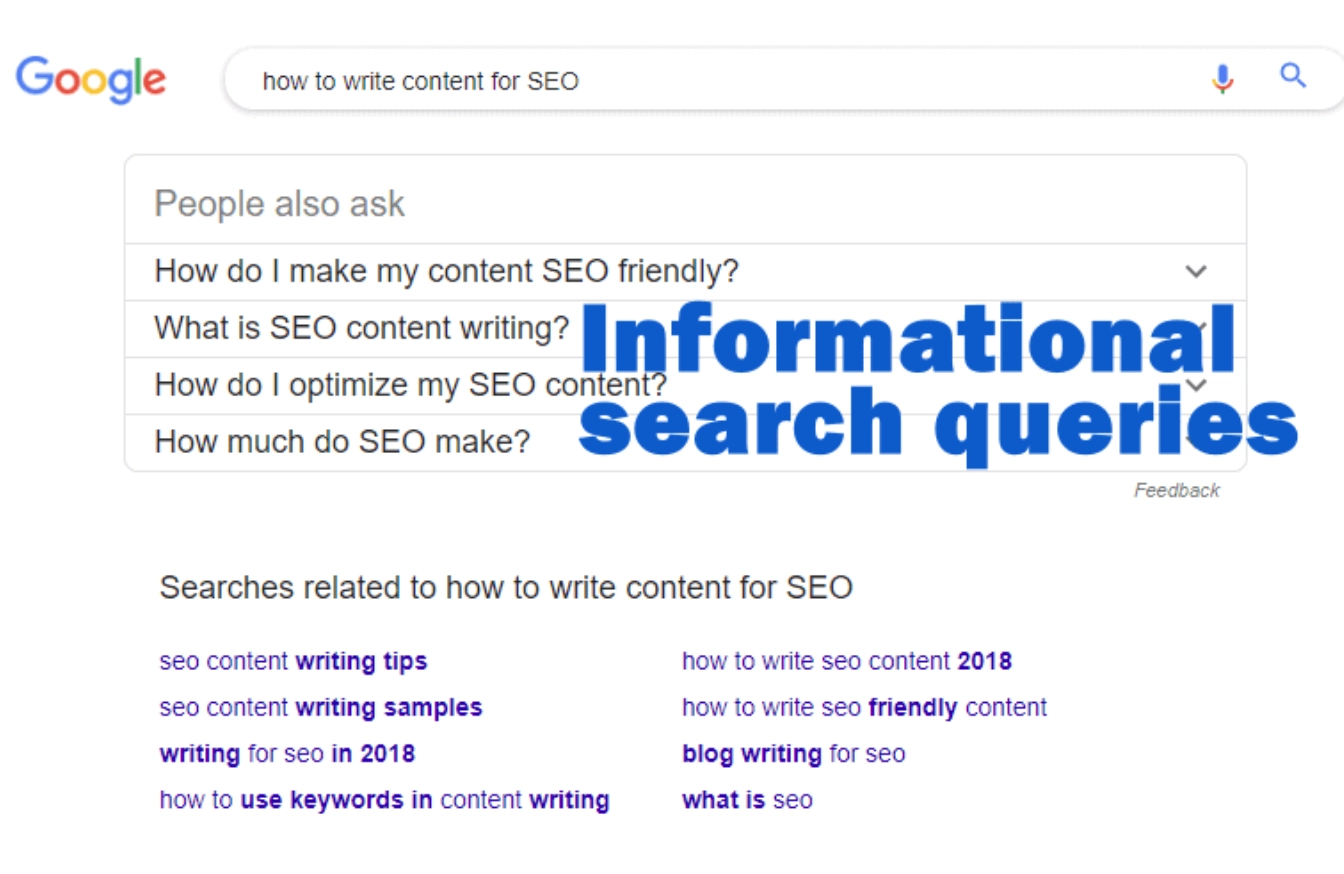
Many of us have turned to Google with curiosity-driven questions like, “Why do leaves change color in fall?” or “Why is Earth getting a temporary second moon?” These are classic examples of informational queries where you’re not shopping or trying to find a specific website; you’re simply searching for answers. Let’s explore what informational queries are and why they matter.
What Is an Informational Query?
An informational search query is a type of search you make when you're curious and want to learn something new without necessarily planning to buy anything or visit a specific website. Say you're wondering, "What is the tallest mountain in the world?" or you're curious about "how photosynthesis works." These are perfect examples of informational queries because your goal is to gather facts, data, or knowledge, not to make a purchase or find a particular website.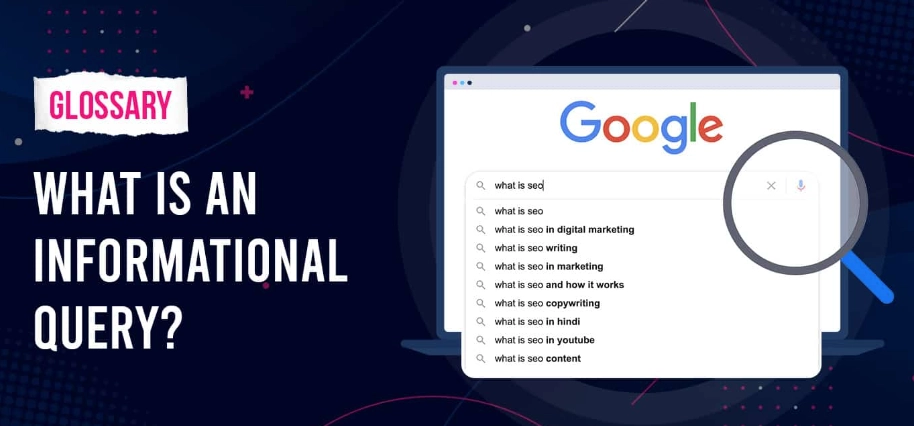 Google classifies these types of searches under "Know" search intent in its Search Quality Raters Guidelines. This classification helps distinguish informational queries from other types of search queries, like transactional or navigational. For example, if you type "Mount Everest height" into the search bar, Google recognizes that you're looking for specific information, not trying to book a trekking trip. Interestingly, not all informational searches need to start with words like "what," "how," or "why." Even something as simple as entering "search engine optimization" into a search engine triggers an informational response. The search results you'll get are likely to include guides, definitions, and explanatory articles rather than links to services or products.
 Why Are Informational Queries Important?
Informational queries are an important aspect of how people use search engines. These queries, often dominated by questions and the pursuit of knowledge, represent the majority of online searches. With a clear understanding of their roles, businesses and content creators can better harness the potential of organic search traffic. Primarily, informational queries are essential because they provide an opportunity to establish credibility and authority within a specific niche. For example, a gardening blog that answers the query, "How to grow tomatoes in pots," serves as a knowledgeable source in urban gardening. Even though users entering such searches might not be ready to purchase gardening supplies immediately, the blog gains trust and authority, setting the stage for future interactions and potential sales. Also, addressing informational search queries effectively allows a website to attract a broader audience. This is particularly beneficial because it helps build brand awareness and familiarizes users with a company's products or services subtly. Over time, this awareness can translate into revenue. As users begin to trust a source that consistently provides reliable information, they are more likely to turn to the same source when ready to make purchases. Additionally, while immediate conversions from informational searches may be low, there's still potential for direct revenue generation. Websites can strategically incorporate affiliate links, engage in pay-per-click (PPC) advertising like Google AdSense, and even sell ad space to monetize the traffic driven by informational content. For example, a tech review site can earn through affiliate sales by linking to gadgets it reviews, even when the primary content is purely informational, such as "What is 5G technology?"What Are the Other Types of Search Queries?
When users turn to search engines, they usually have a specific intention. Whether it’s to buy something, find a particular website, or gather information, each search query plays a major role in how search engines deliver content. Other than information search queries, there are two primary types of search queries: transactional and navigational.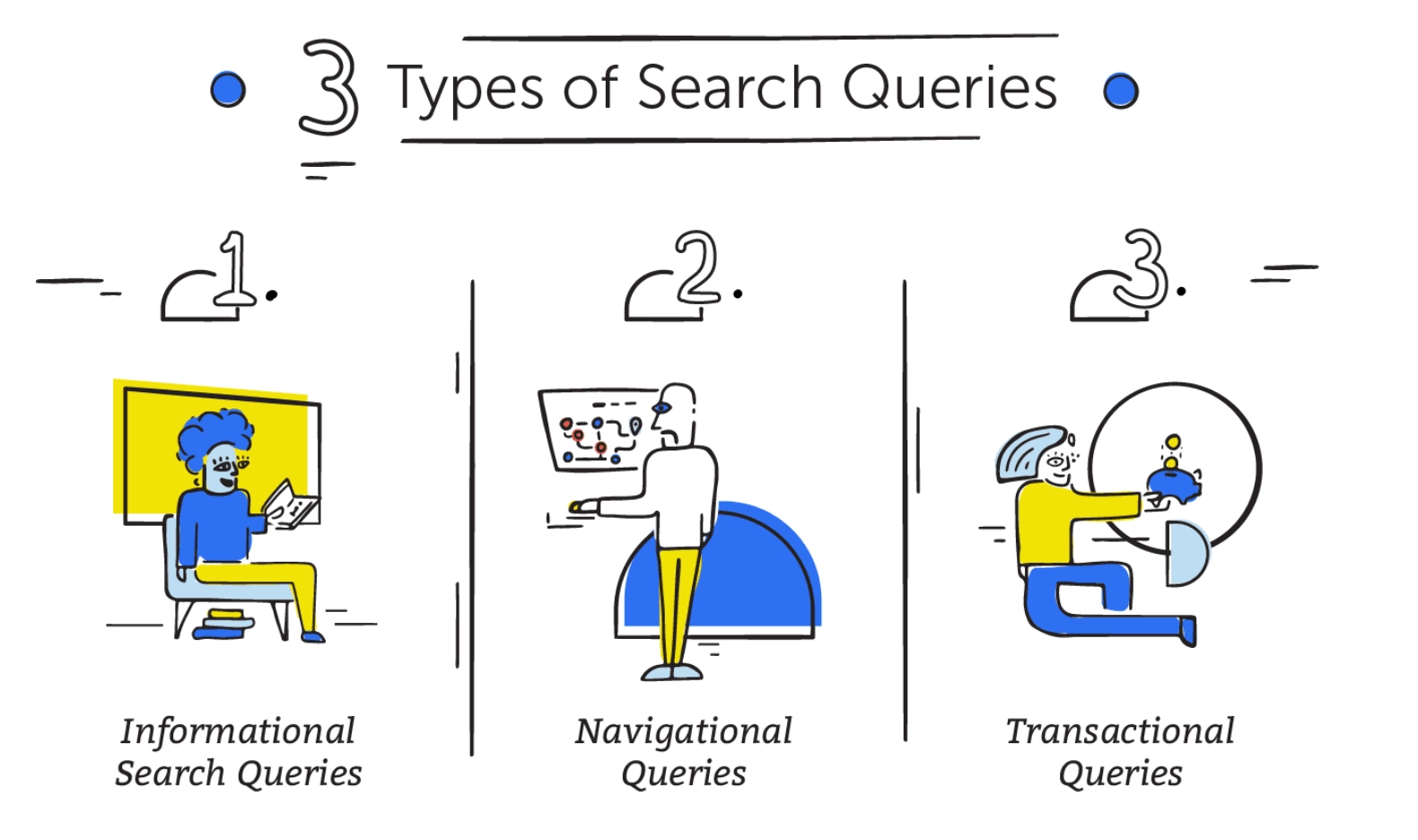
Transactional Search Queries
Transactional queries indicate that the user is ready to buy or engage in a transaction. These searches often include direct action verbs like "buy," "purchase," "order," or "download." For example, a user typing "buy wireless headphones" or "discount codes for pizza delivery" clearly intends to make a purchase. Search engines respond by directing these users to e-commerce sites or business pages where they can complete their transactions.Navigational Search Queries
Navigational queries are used when a user wants to visit a specific website or a particular page within a site but might not know the exact URL. Keywords for a navigational search query often include the names of brands, companies, or specific services. For example, typing "Facebook login" or "YouTube trending videos" suggests that the user wants to navigate directly to these specific pages. These searches are less about discovering new content and more about reaching a known destination. For website owners and content creators, understanding these search query types helps customize content to meet the specific needs and intents of their target audience. Optimizing content for transactional queries helps businesses boost their sales; ranking well for navigational queries improves brand visibility and user access; and providing rich, informative content that addresses informational queries helps build trust and authority.How to Find Informational Keywords to Target?
Finding informational keywords to target is essential for content creators and SEO specialists who want to attract audiences seeking knowledge. These keywords are typically tied to users’ quests for answers to specific questions or more detailed information about a topic. Here's how you can identify and select the best informational keywords for your content: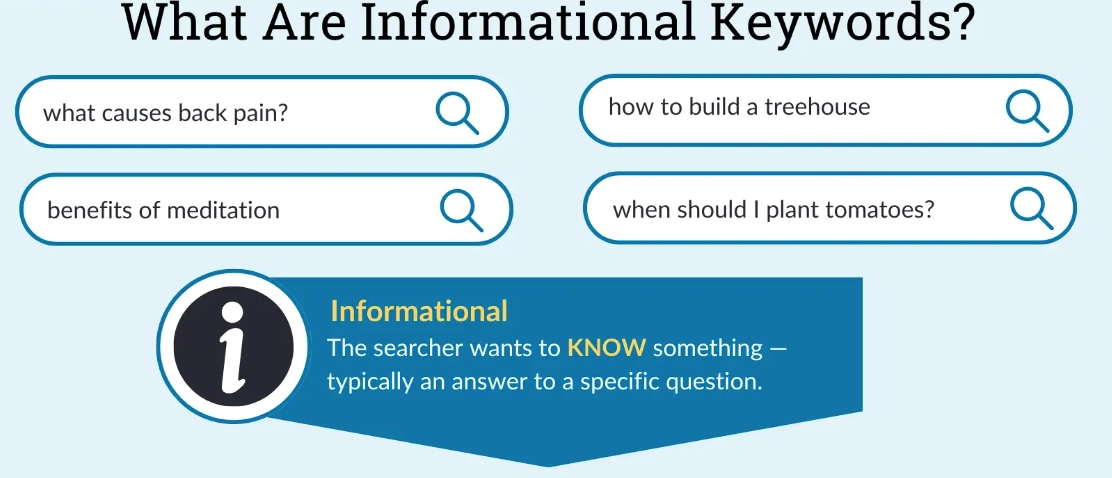
Start with Keyword Modifiers
Informational queries often include certain modifiers that make the user intent clear. These modifiers are words like "how," "what," "why," "where," "when," "tips," "guide," "tutorial," "list," "ideas," and "advice." These words are generally used when the user is looking to learn something new or solve a problem. For example, a search query like "how to bake a sourdough bread" or "what is climate change" clearly indicates that the user is looking for information.Use Keyword Research Tools
To find the best informational keywords, utilize keyword research tools such as Google’s Keyword Planner. These tools allow you to enter a seed keyword and then provide you with a range of related keyword suggestions that include informational modifiers. They can show you how often people search for these terms (search volume), how difficult it is to rank for these terms (keyword difficulty), and even the kind of content that ranks well for these queries.Analyze the SERPs
Once you have a list of potential keywords, the next step is to validate their intent by analyzing the Search Engine Results Pages (SERPs). Look for clues that confirm the keywords are used in informational searches. For example, if the SERPs for a keyword are filled with articles, guides, tutorials, and especially Google’s featured snippets, you can be confident that the keyword is used in informational queries.Check for Featured Snippets
Featured snippets are a good indicator that a keyword is informational. These are the boxes at the top of many Google search results that provide quick answers to queries. If a keyword triggers a featured snippet, it’s a strong sign that people use this keyword when they are looking for straightforward, useful information.How to Optimize Your Pages for Informational Queries?
Here are key strategies to make sure your content meets the needs of users performing informational searches: