
Introduction
Want to know what your competitors are doing to soar their business using Google Ads? Here’s an in-depth how-to on analyzing competitors. Click here to read now!
 Ever since its launch in 2000, Google Ads has transitioned from being an advertising platform to the most sought-after way to reach the target audience and convert them into paying customers. The tool, previously known as Google AdWords, offers a wide range of targeting, analyzing, monitoring, and advertising opportunities to businesses without the burden of managing multiple technical aspects. One such feature is competitor analysis, which allows businesses to develop a thorough understanding of what other companies are doing, how, and the results their strategies are drawing. This helps businesses stay up-to-date on how their target market is responding to the marketing and advertising efforts. Besides, keeping an eye on the competitors helps determine potential gaps and allows a business to improve its strategy for impactful targeting. But how can Google Ads help analyze competitors, and what makes it an important step that marketers and advertisers shouldn’t ignore? Find every detail here, but first…
 What Is Google Ads?
Google Ads is a tool by the search engine giant Google that aims to help businesses run ad campaigns to promote their business, generate sales for their offered products or services, create brand awareness, and increase website traffic. While the tool is free to set up, the business will be charged to use the advertising and promotional services. The tool offers an extensive range of parameters that are feasible for accurate data tracking. Such features enable advertisers to track down what their competitors are doing and areas where your business is yet to tap into. Google Ads is the ultimate tool if you want to ace your advertising efforts and drive tangible results through your campaigns.
 How To Analyze Your Competitors Using Google Ads
Analyzing your competitor is an essential step before starting any advertising campaign. It gives clear and solid ideas with which to work. Here is how you can analyze your competitors using the advertising tool:Identify Who Your Competitors Are
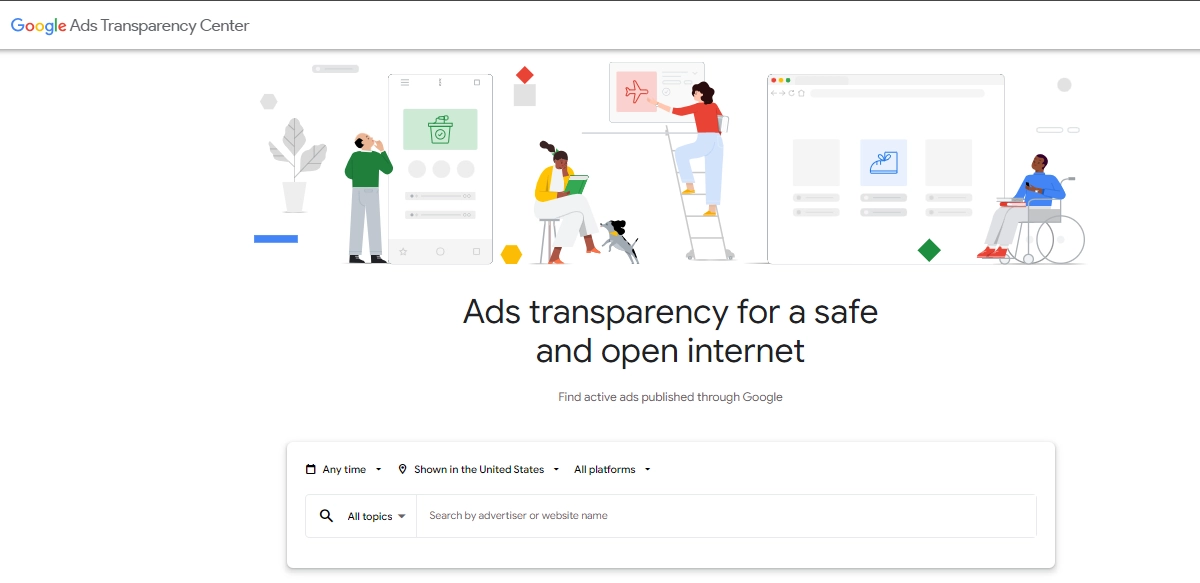 For instance, when we search for Adidas America, Inc., here are the results that pop up: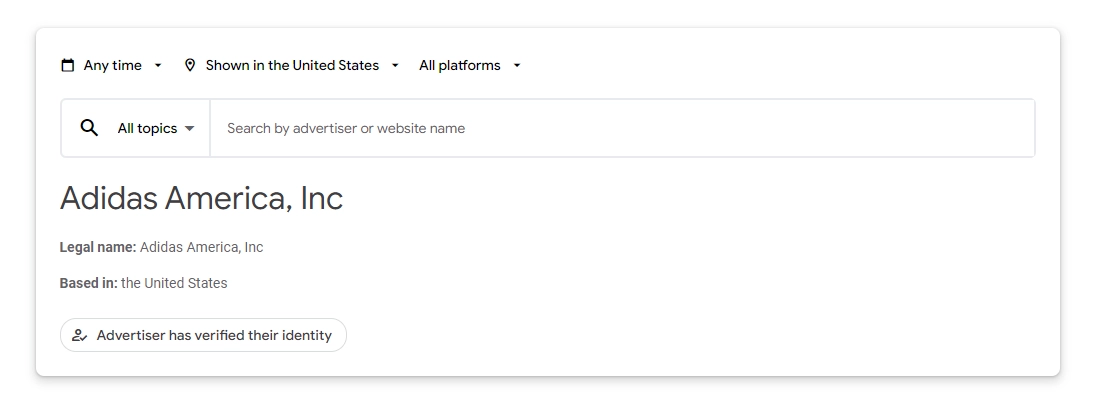
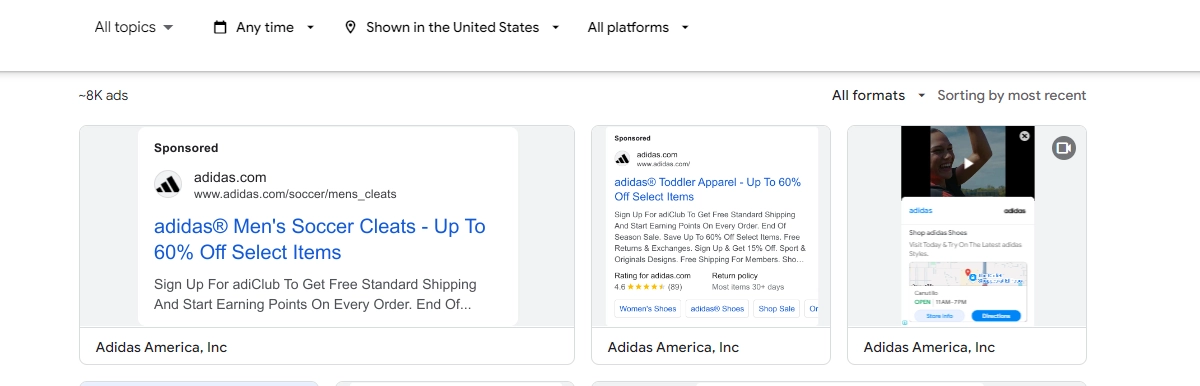 The numbers indicate that the business is currently running nearly 9K advertising ads, giving a clear idea of what the brand is trying to achieve with its advertising campaigns. The ad data can be used to determine the kind of keywords they are using and how you can use those keywords to improve your targeting. The tool also gives insights into the type of advertising campaign (image, text, or video) your competitors are running. If you are unclear about who your competitors can be, start with market research and find businesses offering the same range of products or services. Regularly checking online communities on social media and community forums will give insights into what your target audience is talking about other brands (both positive and negative aspects). Keyword research will be a crucial part of identifying and targeting your indirect and direct competitors, make sure you are periodically checking on trending keywords and the businesses soaring for them.
 Find the Paid Keywords
Review Their Ad Copy
 This will help you revisit your current ad copies and make improvements to increase the impact of your Google PPC campaigns. Ads are the first thing that your target audience will come across, and making sure they are direct, impactful, and action-oriented will ensure quicker conversions. For instance, mentioning features, benefits, problems the product or service solves, reviews, and testimonials make for an excellent framework for a solid, well-performing ad campaign. Adding target keywords in the ad copy as well as landing pages is another highly impactful best practice to match the specificity of your potential customers. On top of these, using ad extensions is also an incredibly effective way to make the most of your ad campaigns.
 Track Campaign’s Ad History
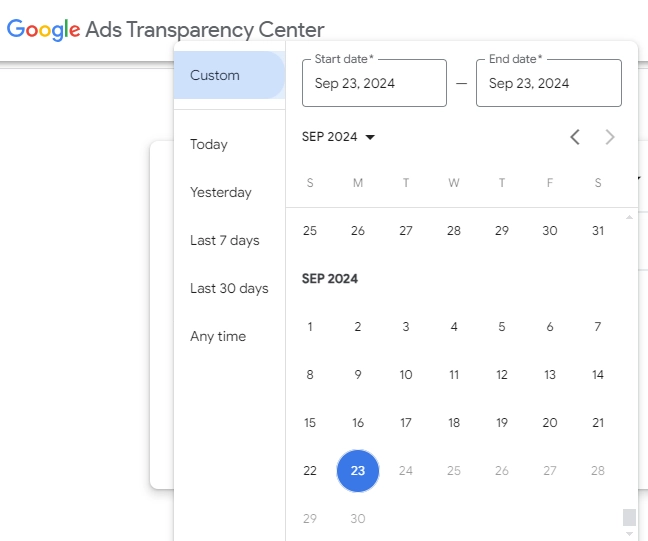 Checking ad history also helps evaluate potential ad spending, a crucial factor to consider when planning a budget that meets your goals without draining your wallet. It also helps to adjust marketing benchmarks to ensure more focus is on generating revenue as well as brand recognition in the target market. Another key benefit of doing so is enabling your business to leverage new and untapped opportunities.
 Check Landing Pages in Use
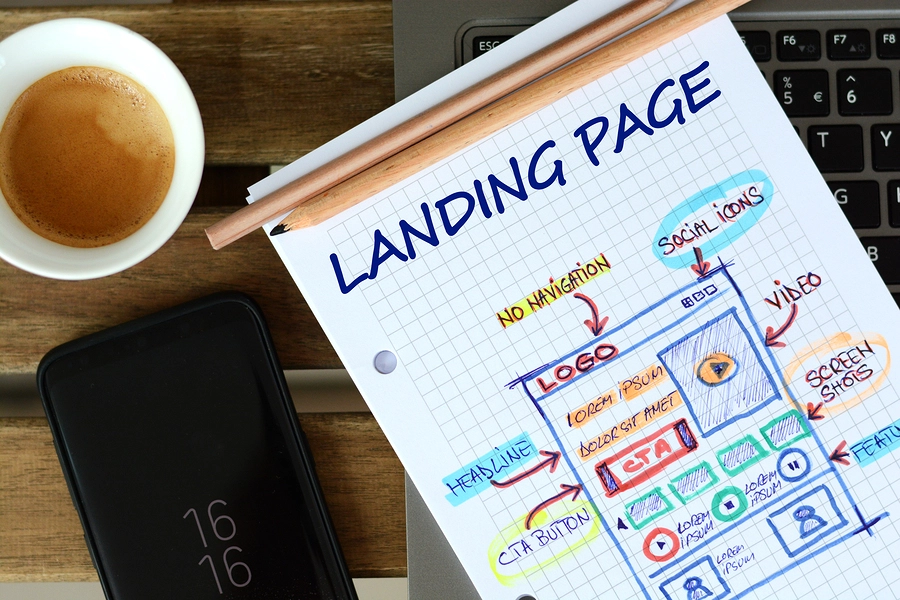 Using tools like Google Ads Auction Report or manually checking Google search results can help find landing pages for the keyword(s) you are aiming to target. Checking parameters like loading speed, user experience, ease of availing the offer, and the overall process can be beneficial aspects that can be taken inspiration from. To ensure your landing pages are communicating the right message, working on creating a simple yet impressive design, placing valuable offers first, and keeping the content action-oriented can generate higher leads and conversions. At the same time, avoid making the sign-up or registration process easy and less time-consuming.
 Determine Their Ad Expenses
 Using tools like Google Merchant Center’s Price Competitiveness and Google Merchant Center’s Best Sellers is excellent for finding accurate data indicating the total budget your competitors have allocated for their ad campaigns. If you are unsure about how much you want to spend, consider starting small and then increasing your budget depending on the results your campaigns are able to achieve. Take into account how many clicks will cost on average and an estimate of how many clicks you are expecting to get to generate the desired results. Your budget should allow enough margin to generate conversions at a consistent rate. Also, run ad campaigns only if your website receives more than 200 website visits on a monthly basis.
 The Benefits of Conducting Competitor Analysis With Google Ads
Google Ads has been helping businesses create a mark for themselves online by enabling them to compare and analyze their competitors. Here are all the reasons to use the tool for your competitive research and analysis:- Identifying untapped keyword opportunities can help find potential gaps in your own keyword strategy. It enables practical bidding that eventually generates results.
- Optimized keyword targeting aims to drive significant traffic to your website that eventually converts into paying customers.
- Comparing metrics and key performance indicators like click-through rates, conversion rates, and average cost per click with your competitors.
- Highlights areas for improvement that are underperforming, creating more scope for improvement in campaigns.

- The analysis helps determine which ad copies are working wonders for your competitors. Then, you can upgrade your own copies to help grab higher conversions through improved ad campaigns.
- Keeping track of your competitor’s latest strategies and comparing them with upcoming trends creates room to prepare for upcoming changes in market dynamics and consumer behavior.
- Makes business expansion possible by unraveling audience pools you are unable to target and increasing your business’ potential to increase conversion.
Mistakes To Avoid When Reading Competitor Data and Insights
The bulk data that originates from competitor analysis with Google Ads can be overwhelming. Here are common mistakes to avoid when analyzing competitor research and analysis data:- Heavy reliance on surface-level data can prevent you from diving deep into details that are actually driving results. While checking broad metrics can be helpful in creating an outline, looking for factors that denote quality is crucial.
- Focusing solely on bigger brand names and not checking how other small- or medium-scale businesses are capturing the attention of their target audience will help find gems that can spark newer and more innovative strategies for improved conversions.
- The advertising landscape is constantly changing, making it crucial to stay ahead of the curve. Making timely changes in strategy ensures your business can continue bringing offers, products, and services that align with the changing wants.
- While maintaining an ad campaign strategy that is robust and updated to meet the latest needs and wants of your target market, it is equally important to track how the changes you have made are performing.

- Avoid trying to mimic everything that your competitors are doing right. It dilutes your brand’s personality while making it seem like a distant lookalike of the competitor. Instead, combine what’s working for them with your own unique ideas to stand out and create a supreme brand presence.
- Not combining organic efforts with your advertising efforts is another mistake that can slow down your growth while creating inconsistencies. Make sure the efforts being put into advertising align with the claims being made using an organic approach to win the trust of your potential customers.