
Introduction
Click Through Rate (CTR) is a foundational metric. However, it is an important determinant of whether your headings, titles or subject lines are worth clicking. A high CTR shows that your content sparks curiosity among users, while a lower one indicates that you need to work on your content.
Understanding CTR
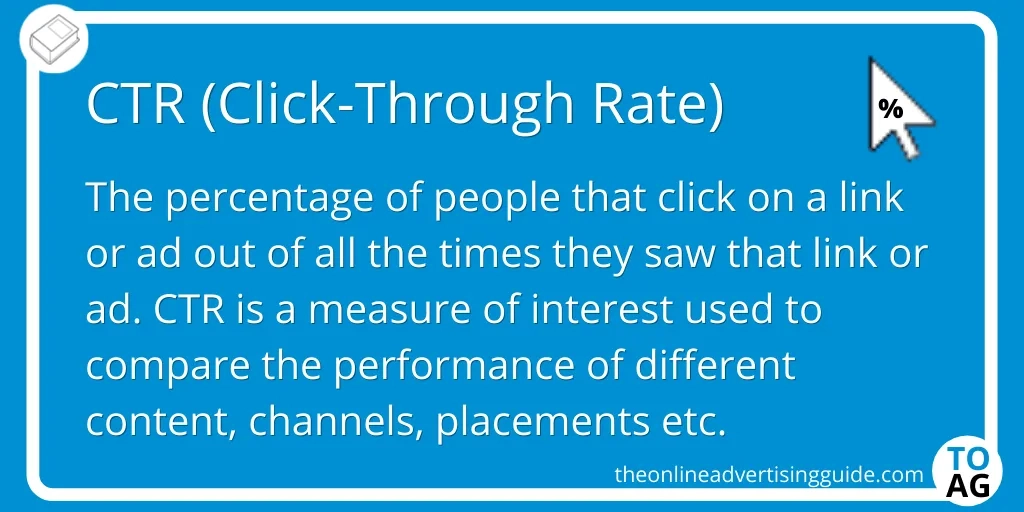 It might look like a complicated concept, but it is quite easy to understand. CTR, or click-through rates, measure the percentage of people who see your content (like an ad, email, or those blue links on search results) and click on one or more links. Calculating click-through rates is pretty straightforward. Divide the number of clicks your content receives by the total number of impressions (how many people saw it). For example, if 200 people see your ad and 5 of them click on it, your click-through rate is 2.5%.
 Factors Affecting CTR
Your click-through rate (CTR) isn’t just a random number. It’s influenced by several factors that work together. Let’s break down some of the key ones.Landing Page Quality
When someone clicks on your ad or link, where do they land? Your landing page. If your landing page is slow, confusing, or doesn’t match the expectations (or intent) set by your content, they’re likely to bounce. A well-designed landing page that offers a clear value proposition and a smooth user experience can boost your CTR.Relevancy
Is your ad or page relevant to the user’s search query or interests? A highly relevant page is more likely to capture attention and encourage a click. For example, if someone searches for “best hiking boots,” an ad for a new line of running shoes probably won’t entice them to click.Call to Action (CTA)
Your CTA is the action you want users to take. It could be anything from “Buy Now,” “Learn More,” or “Download your free copywriting guide.” A clear, concise, and compelling CTA can encourage clicks and conversions.Targeting Accuracy
Who are you targeting with your ads? If you’re targeting the right audience, you’re more likely to see higher CTRs. For instance, online advertising for a luxury handbag on a platform primarily used by teenagers might not yield the best results.User Experience
Overall, how easy is it for users to interact with your content? A positive user experience, including factors like page load speed, mobile optimization, and easy navigation, can contribute to higher CTRs.Calculating and Analyzing CTR
Let’s dive into how to calculate and analyze CTR effectively.Calculating CTR
You know the formula for calculating this metric: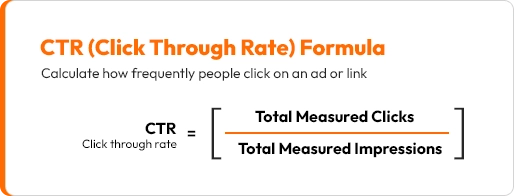 Now, let’s discuss the tools. Most digital marketing platforms (like Google Analytics, Facebook Ads Manager, Google Search Console, or any email marketing software) provide built-in tools to track and calculate click-through rates.
 Analyzing CTR
- Benchmarking: Compare your average click-through rate to industry benchmarks or historical data. This will give you a sense of how your performance stacks up.
- Trends: Look for trends in your click-through rates over time. Are you seeing a dip or rise? Identifying trends can help you pinpoint the effectiveness of your marketing strategies.
- Segmentation: Break down your click-through rate data by different segments, such as demographics, devices, or ad or email marketing campaigns. This can help you identify which audiences or strategies are performing best.
- A/B Testing: Experiment with different variations of your content (e.g., headlines, images, CTAs) to see which ones drive higher click-through rates. A/B testing allows you to make data-driven decisions and continuously improve your performance.
Interpreting CTR Data
- Context is Key: While a high click-through rate is generally a good sign, it’s important to consider the context. A high CTR for a low-traffic ad might not be as significant as a high CTR for a highly visible ad.
- Conversion Rate: The click-through rate is just one piece of the puzzle. Ultimately, you want users to click on your content and take the desired action (e.g., make a purchase or sign up for a newsletter). So, it’s important to also keep tabs on your conversion rate to get a complete picture of your internet marketing performance.
Improving CTR
Here are some strategies to help you improve your click-through rate:Optimize Landing Pages
Make sure your landing pages are relevant, clear, and visually appealing. Use strong headlines, compelling visuals, and a clear call to action. Your landing page must fulfill the search intent to compel users to take action and enhance your CTR.Test Different CTAs
Experiment with different CTAs to see which ones perform best. Try variations like “Double your organic traffic” or “Boost your search rankings.” The idea is to be as clear as possible and tell users what they’ll get instead of what they should do.Improve Targeting
Refine your targeting to reach the right audience. Use demographics, interests, and behaviors to create more targeted content. Employ personalization in your copies and titles to ensure your content resonates with your audience.Leverage User Feedback
User feedback is probably the best way to improve your click-through rates. Pay attention to user feedback and make necessary adjustments to your content and future campaigns. Working on feedback improves your CTR while portraying you as a responsible brand as well.CTR in Different Channels
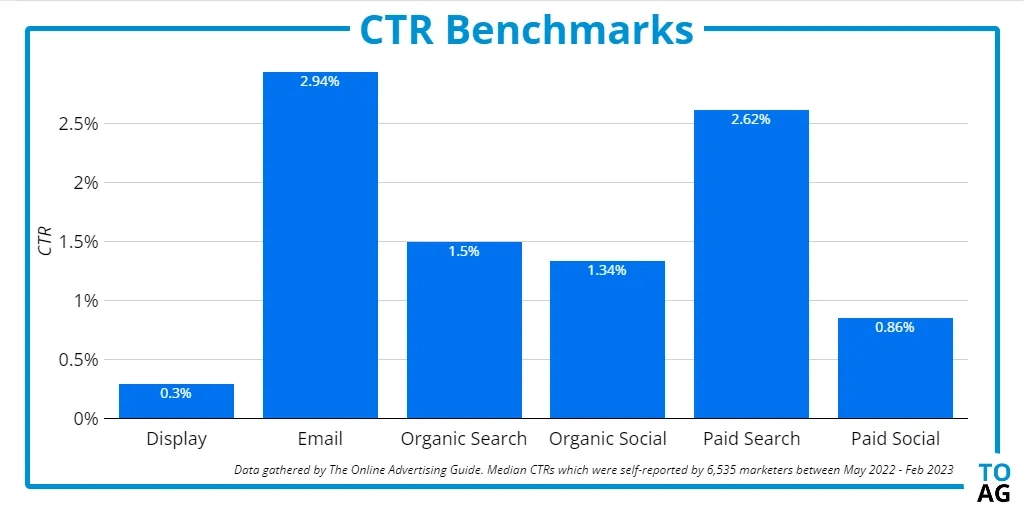 CTR can vary significantly across different marketing channels. Let’s explore how CTR plays a role in some of the most common channels.