
Introduction
Link building has been one of the most important ranking factors for several years now. As a website owner or marketer, if you want to stay competitive, you need to level up your link-building efforts. But first, you need to understand where your site currently stands in terms of backlinks. This is where backlink analysis becomes so important.
What Does Backlink Analysis Mean?
Backlink analysis is a comprehensive assessment of a website’s backlinks that helps evaluate the site’s performance and identify issues that could impact its search engine ranking. With backlink analysis, you can understand the credibility, relevance, and overall health of a site’s backlink profile.Backlink analysis is one of the best ways to understand what factors are contributing to a site’s ranking. The process also shows how your website fares against your competitors. You will get valuable insights into what strategies your competitors are using and what you could adopt to make your website pages rank higher in the search engine results pages.Backlink analysis also helps you identify new growth opportunities. With a clear understanding of your backlink profile, you can refine your link-building strategies and improve your overall website SEO performance. As you may realize, backlinks help improve your search engine rankings, which makes backlinks analysis an essential part of your SEO strategy.The Importance of Backlink Analysis for Link Building
Link building is not about having the most links. It is about finding the most relevant links from authoritative websites in your niche. The inbound links help drive traffic to your website by expanding your target audience and reaching people who haven’t visited your site previously. Backlink analysis provides you with crucial information about your site’s backlink profile and helps you improve your link-building efforts.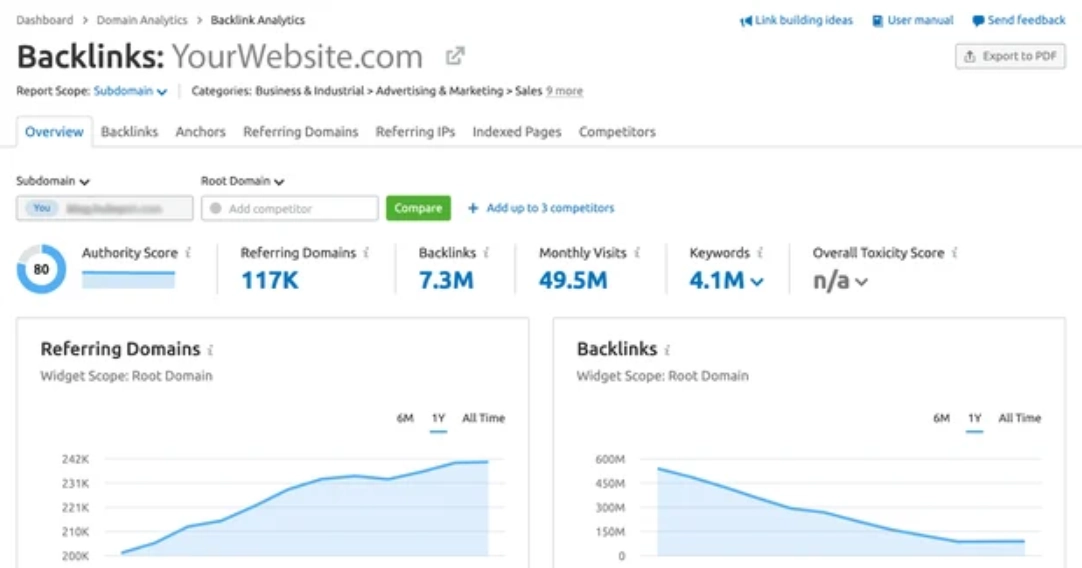 As mentioned earlier, backlink analysis also lets you analyze your competitor’s backlink profile. By doing so, you can learn more about their backlinking strategies. You can assess the link equity of your competitor’s backlink portfolio and find their broken and spammy backlinks. These links provide amazing link-building opportunities that you can use to outperform your competitors. Backlink analysis also gives you a clear picture of your website content. If people are linking to your website pages, it indicates that your content offers value to readers. By assessing your backlink profile, you can create a roadmap for your content creation strategy.
How to Conduct a Backlink Analysis?
Conducting a backlink analysis is a systematic process. To obtain the necessary information about your site’s backlink profile, you need to implement each step of this process effectively. Here is how you should approach a backlink analysis, which also covers competitive analysis.Select the Sites You want to Analyze
Most people use backlink analysis to evaluate the backlink profile of their own website. At the same time, you should shortlist all the competitor sites that you want to review. When you hear the word “competitor,” you may already have a few names in your mind. Having said that, you will want to pick sites that meet the following criteria:- Offer similar services or products
- Currently positioned at higher ranks for your target keywords
Analyze the Backlinks Linking to Your Website
The first thing in a backlink analysis is to examine the overall number of backlinks that lead visitors to your site. You can compare this number with the total backlinks your competitors have to find out overall authority. As you may already know, pages with the highest number of total backlinks usually rank high in Google search results. By analyzing the total number of backlinks to your website, you get a clear picture of your site’s online reputation.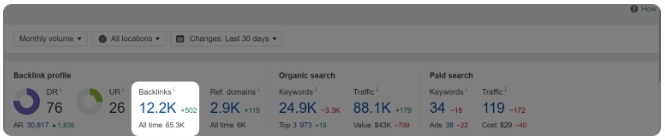 When your website receives a large number of backlinks, it shows that other websites consider your content valuable and link-worthy. You can use backlink checker tools like Ahrefs, Majestic, SEMrush, etc., to analyze the backlink profile of a website (yours or your competitor’s). To check the total number of backlinks on the site, you need to enter the domain in a particular field on the tool. The user interface may vary from one tool to another. So, go through the tutorial to learn how to operate a certain backlink analysis tool.
Segment Unique Domains
The total number of backlinks does help you assess your website's authority. However, you need to understand whether those links are coming from the same 3-4 websites or different sources. Consider segmenting them based on unique domains. Search engines like Google love diversity while considering backlinks as a ranking factor. Also, when a website has too many backlinks, it can be a sign that the website is using some manipulative tactics.To avoid being penalized by Google and other search engines, you need to ensure that your website's backlinks come from authoritative and credible websites. You can find the number of referring domains using these tools. While you are at it, check the domain rating for high-quality backlinks. While the total number of backlinks is crucial for search engine rankings, it is even more important to have valuable backlinks from reputable websites.Check Anchor Text Quality
The next big step in the backlink analysis process is to identify the anchor text. These are the words or phrases used to hyperlink your webpage. Anchor text plays an important role in providing context to users and search engines about the linked content. While you review your backlinks, you must check the words or phrases used in the anchor text.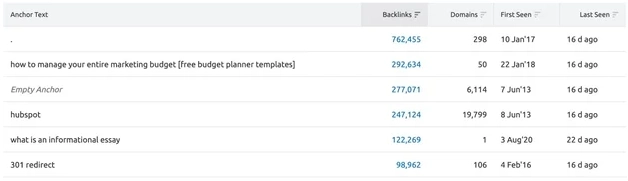 In ideal scenarios, linking sites would use your target keywords as anchor text. This gives clear signals to search engines about content relevance. To make sure you have high-quality anchor text, you need to perform a few measures:
- Ensure that the anchor text is relevant to the linked content
- Anchor texts need to be keyword-rich and naturally fit into the content
- Avoid generic phrases like “Read more” or “Click here” in your anchor text
- Use different keywords to target similar pages
- You can ask others to change the anchor text they use to link to your site
Analyze the Details
After you have covered the basics of the backlink analysis process, you need to analyze the details to understand the meanings of certain metrics. Start by looking at the anchor texts. If you look closely, you can identify spammy backlinks that could be affecting your ranking. Just check if the anchor text relates to the content on your site. If it reads like a junk email and includes crude language, it is most likely spam.Once you have identified these links, you should contact the websites and ask them to remove the backlinks. Although the chances of success are low, this method works in some instances. The more realistic option is to disavow those links. With this measure, you tell Google to ignore those backlinks.You will also have to look at the country code top-level domain (ccTLD) distribution. It refers to the last portion of a URL, which tells you the country it originates from. This is another way to mark the websites that could be hurting your rankings. If your website gets a lot of traffic from Haiti, you are likely to have a significant number of .ht backlinks. However, if you start noticing links like .in or another unfamiliar TLD, you need to review this matter.Identify Broken Backlinks
There is no point in having links that do not add any value to your backlink profile. This is why you must be on the lookout for broken links while conducting a backlinks check. These links direct readers to your web page, which does not exist, leading to a 404 error. If too many people come across broken links directing to your site, they will start seeing your website as less trustworthy. Also, the broken links make your website harder to crawl.Checking your backlinks on a regular basis helps you find broken links easily. You can use SEO tools to identify these links. Once you find these links, you need to perform the following steps:- Reach out to the referring domain and ask that it needs to be fixed
- Redirect the broken page to a new webpage on your website
- Redirect the broken page to a different page on your site with similar content
Analyze Your Competitors’ Backlink Profiles
As mentioned above, you should also analyze your competitors’ backlink profiles to get a competitive edge. As you put the competitor’s domain on the SEO tool, you can get all the backlink data about their website and use it to define the backlink gap. You can use the information to find new backlinking opportunities.You can also find your competitors’ broken links. Simply contact the linking websites and suggest that they replace these broken links with yours. You should also find guest posting opportunities when conducting competitors’ backlink analysis. Guest posting allows you to establish authority and build quality backlinks from reputable websites. Identify the websites where your competitors have guest posts, and reach out to those websites for guest blog collaboration.Lastly, you need to pay attention to the content gap. You can address this issue by finding topics that your competitors' websites cover. If you do not cover those topics and the target audiences love them, you should start putting effort into creating fresh and valuable content on such topics. This will help attract more readers and quality backlinks.Find Out and Reclaim Lost Backlinks
Losing an existing backlink is quite common in today’s rapidly changing market. You can identify lost backlinks using the same SEO tool. If some of your backlinks have been removed or deleted recently, you must reach out to the website editors and reclaim your backlinks. There is a slim chance that the website editor will respond to your request. However, there is no harm in trying, as it can make your backlink profile better.A comprehensive backlink analysis allows you to optimize your site’s SEO performance. By following the aforementioned steps, you can gain valuable insights into your link profile, discover areas for improvement, and implement strategies to boost the website’s rankings on search engine results pages.When Should You Conduct a Backlink Analysis?
Backlink analysis helps you assess the health of your backlink profile. So, it is recommended that you analyze your backlinks periodically. You should also consider analyzing your backlink profile during the following instances:Before and After a Link-building Campaign
If you are planning to run a link-building campaign within a few days, you should conduct a backlink to take note of the current health of your backlink profile. This will function as the starting point for your link-building campaign. Once your campaign is over, you should analyze your backlink profile one more time to measure the campaign’s effectiveness.Sudden Dip in Rankings
No matter how good you are with your SEO strategies, there will always be situations when your website metrics may drop. A backlink analysis may help you identify the potential issues and turn things around in your favor. Before you conduct a backlink analysis, you need to set clear goals for the process and decide what metrics you should examine - the number of backlinks, anchor text diversity, or others.Other Major Instances
A dip in rankings and a link-building campaign are two of the most important events that concern your website’s backlink profile. Apart from these two instances, you should also consider running a thorough backlink analysis in the following situations:- A loss of traffic
- Underperforming content
- Algorithm updates
- After receiving a manual penalty